Few things are more frustrating than looking out your window and seeing a patchy, brown lawn that once looked lush and green. Whether it happened after a harsh summer, heavy foot traffic, poor drainage, or neglect, the good news is this: reviving a dead lawn is often possible.
Before you give up and plan a full replacement, it is important to figure out what went wrong and take the right steps to restore it. Let’s walk through how to bring your yard back to life.
Is Your Lawn Really Dead or Just Dormant?
This is the first and most important question.
Grass can go dormant during extreme heat or drought. Dormant grass looks brown and dry, but the roots are still alive. According to turfgrass experts, many cool season grasses can survive weeks of drought by going dormant.
Here is a quick test:
Gently tug on a small section of grass. If it pulls out easily with no resistance and the roots are brittle, it may be dead. If it resists and you see white roots, it is likely dormant.
Understanding the difference is key to reviving a dead lawn the right way.
Step 1: Identify the Cause
Grass does not die without a reason. Common causes include:
- Drought stress
- Poor soil quality
- Compacted soil
- Disease
- Overfertilizing
- Pet damage
- Poor drainage
Take a close look at the affected areas. Are they in full sun? Do they stay soggy after rain? Identifying the root problem prevents it from happening again.
Step 2: Remove Dead Material
If parts of your yard are truly dead, start by clearing them out.
Use a rake to remove thatch and dead grass. This helps loosen the soil and creates better contact for new seed.
If the soil feels hard and compacted, aerating can significantly improve conditions. Aeration allows water, oxygen, and nutrients to reach the roots more effectively.
Proper preparation makes reviving a dead lawn much more successful.
Step 3: Improve the Soil
Healthy grass starts with healthy soil.
Consider adding:
- Compost to improve nutrients
- Topsoil to level uneven spots
- Soil amendments if a test reveals nutrient deficiencies
A soil test can provide valuable insight into pH levels. Most grasses grow best in slightly acidic to neutral soil, typically between 6.0 and 7.0.
Improving soil quality is one of the most overlooked steps in reviving a dead lawn.
Step 4: Reseed or Resod
Once the area is prepared, you can choose between reseeding and laying sod.
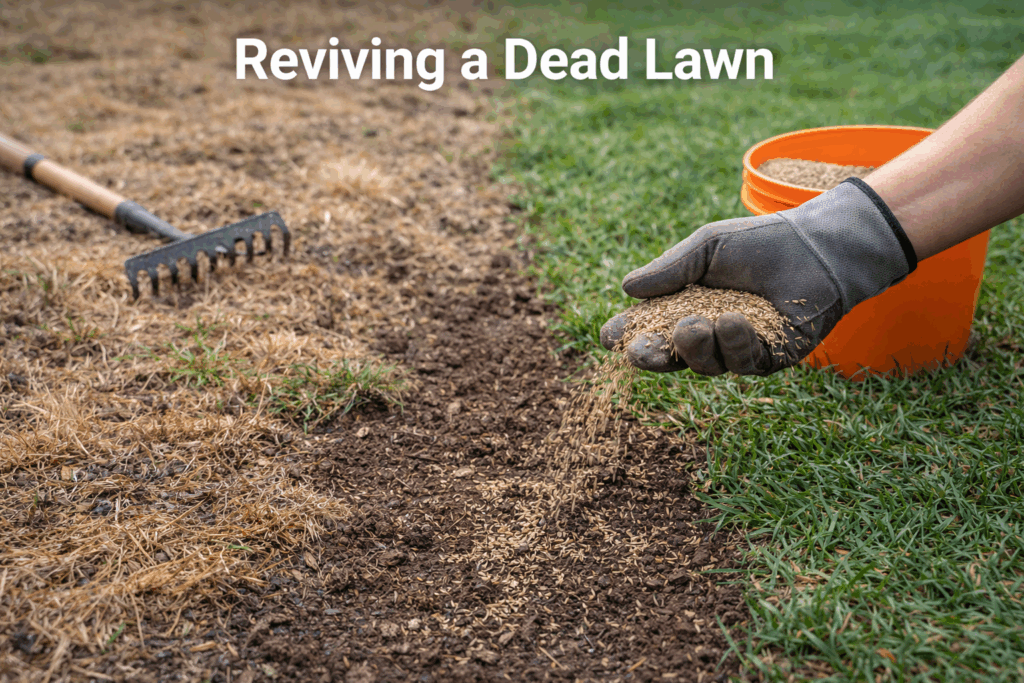
Reseeding is cost effective and works well for moderate damage. Spread high quality grass seed evenly and lightly rake it into the soil.
Sod provides instant results but is more expensive. It is often used when large sections of the lawn are completely dead.
Be sure to choose grass types suited to your climate and sun exposure.
Step 5: Water Properly
Watering is critical during recovery.
New seed needs consistent moisture. Light watering once or twice daily helps keep the soil damp without oversaturating it.
As grass begins to establish, shift to deeper, less frequent watering. This encourages stronger root growth.
According to lawn care research, deep watering promotes deeper root systems, which improves drought resistance in the future.
Step 6: Fertilize Carefully
Once new grass starts growing, apply a balanced fertilizer to support development.
Avoid overfertilizing, as this can stress young grass and cause additional damage. Follow product instructions carefully.
Proper nutrition is an essential part of reviving a dead lawn and maintaining long term health.
Preventing Future Lawn Damage
After your lawn recovers, prevention becomes the focus.
To protect your yard:
- Mow at the correct height for your grass type
- Water deeply but not too often
- Aerate annually if soil is compacted
- Address drainage issues
- Avoid excessive foot traffic on stressed areas
Regular maintenance keeps your grass resilient during seasonal changes.
Final Thoughts
Reviving a dead lawn takes patience, but it is often achievable with the right approach. By identifying the cause, improving soil conditions, reseeding properly, and maintaining consistent care, you can restore your yard to a healthy, green state.
Instead of replacing everything, focus on smart recovery steps. With a little time and effort, your lawn can go from brown and patchy to vibrant and thriving once again.